
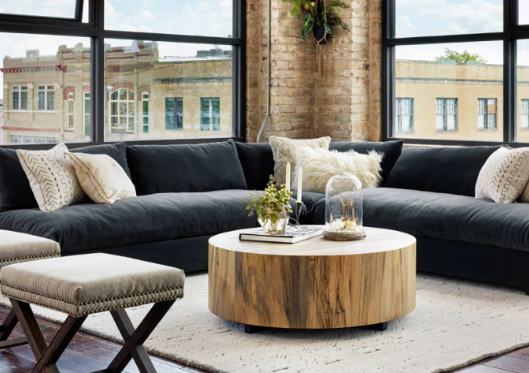
Choosing the right position for your coffee table in relation to your living room sofa can greatly enhance the functionality and aesthetic of the space. Whether you’re entertaining guests or enjoying a quiet evening, the placement of your coffee table can affect both comfort and accessibility. In this post, we’ll explore the best practices for coffee table positioning to create an inviting living room environment.
1. Ideal Distance from the Sofa
One of the most important factors to consider when positioning your coffee table is the distance from the sofa. Ideally, the coffee table should be placed between 14 to 18 inches away from the sofa. This distance allows people to easily reach for drinks or snacks without feeling cramped. It’s all about finding that sweet spot where you can enjoy the table’s functionality while keeping an open space for movement.
For smaller rooms, you might think about slightly reducing this distance to around 12 inches if necessary. Conversely, in larger spaces, you can afford to place the table further away, but too much distance could make the coffee table feel disconnected from the seating area. Always keep in mind the scale of the furniture in relation to the room for an inviting look.
-
- Measure the distance to ensure it’s between 14-18 inches.
-
- Consider a smaller distance of around 12 inches for compact spaces.
-
- Make sure the coffee table is not obstructing pathways.
-
- Test the distance by sitting on the sofa and reaching for the table.
2. Coffee Table Height Considerations
The height of your coffee table in relation to your sofa is another crucial aspect to consider. Generally, the tabletop should be about 1 to 2 inches lower than the seat of the sofa. This ensures that guests can easily put their feet up on the table if desired, while also making it comfortable for everyone to grab items from it.
In homes with sectionals, a lower coffee table may further enhance the casual feel of the space. If you have a higher sofa or a specific design aesthetic in mind, consider using a coffee table with adjustable height. This lets you tailor the coffee table’s height to better match your sofa and personal preferences.
-
- Choose a coffee table that is 1-2 inches lower than the sofa seat.
-
- Evaluate your space with the coffee table at different heights.
-
- Consider multifunctional tables with adjustable height if necessary.
-
- Keep in mind the visual balance between the table and the sofa.
3. Shape and Style of the Coffee Table
The shape and style of your coffee table can significantly influence how well it fits into your living space. For a traditional living room, a rectangular coffee table might work best, while round tables can facilitate movement in smaller spaces and are safer in homes with children. The table should complement the style of your sofa and other furniture pieces in the room.
When it comes to finish and material, consider using wood for a warm, inviting feel, metal for a modern touch, or glass for an airy vibe. Don’t forget to coordinate with the color palette of your living room for a visually pleasing effect. A coffee table that harmonizes with other furnishings ties the whole room together.
-
- Select a table shape that complements your sofa arrangement.
-
- Choose materials and colors that harmonize with your overall decor.
-
- Think about how guests will navigate around the table.
-
- Pick a style that resonates with your personal aesthetic preferences.
4. Functional Uses of the Coffee Table
Beyond mere aesthetics, a coffee table can serve various functions in your living room. It can act as a place to rest drinks, hold decorative items, or even provide storage space. Depending on your lifestyle, incorporating these functional elements into your coffee table design can enhance both its utility and visual appeal.
If you regularly entertain guests, consider using a wider table that can accommodate snacks, games or magazines. If the coffee table will be used daily by family members, look for options with drawers or shelves for storage to keep the tabletop organized and clutter-free. Think about multifunctional pieces that adapt to your needs.
-
- Use your coffee table for storage to keep it clutter-free.
-
- Incorporate decorative items for personal flair.
-
- Ensure the surface area is ample for beverages and snacks.
-
- Consider multifunctional designs for added utility.
In conclusion, the positioning of your coffee table is essential for both functionality and style in your living room. By considering factors such as distance, height, shape, and functionality, you can create a welcoming space that invites comfort and conversation. Experiment with different arrangements to find what feels best for you and your home!