
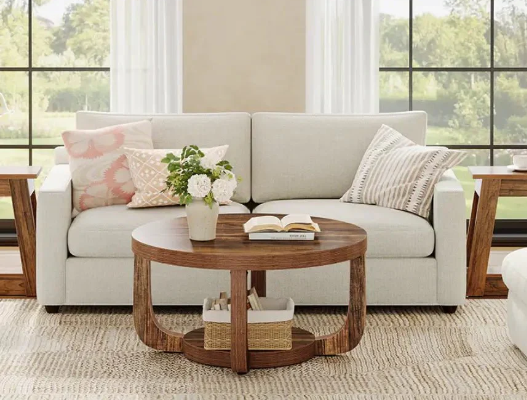
Designing the perfect living space involves more than just choosing a comfortable sofa or a stylish coffee table; it’s about how these elements work together to create an inviting atmosphere. In this post, we will explore various coffee table and sofa interior design ideas that not only enhance aesthetics but also improve functionality within your space. Let’s dive in!
1. Choosing the Right Coffee Table
When selecting a coffee table, size, shape, and material play critical roles in harmonizing your living room’s décor. For smaller spaces, a round or oval coffee table can create fluidity without overwhelming the area. In contrast, larger rooms can accommodate rectangular or square tables that facilitate different seating arrangements. Consider materials—wood, glass, or metal—each offering a unique texture and style that aligns with your overall theme.
Additionally, think about the function of the coffee table. Some may choose a simple design, while others may prefer multifunctional pieces like those with storage capabilities or even removable trays for convenience. This ensures that the table serves its purpose as a centerpiece while maintaining practicality in everyday use.
-
- Measure your space to ensure the table fits well between seating.
-
- Choose materials that complement the sofa and other furnishings.
-
- Consider functionality; select a table with storage if needed.
-
- Choose a shape that flows well with your room’s layout.
-
- Use decor to enhance the table—think books, vases, or seasonal accents.
2. Sofa Styles That Enhance Your Space
When it comes to sofas, the style you choose can dramatically influence the overall atmosphere of your room. For a casual and cozy vibe, opt for a sectional sofa that offers plenty of seating while nurturing a relaxed environment. Conversely, a mid-century modern sofa can lend a more formal elegance, ideal for entertaining guests. Each style has its color palette and texture potential, which can either blend with or stand out against other elements in the room.
Additionally, consider the arrangement of the sofa in relation to the coffee table and other furniture. A sofa placed directly across from the coffee table creates an inviting conversation area, while angled seating can foster a more dynamic layout. Always allow ample space for movement; ideally, there should be 18 inches between the sofa and coffee table for comfortable accessibility.
-
- Select a sofa style that reflects your personal taste and complements your home.
-
- Arrange the sofa in a way that encourages conversation.
-
- Incorporate various textures, such as throw pillows and blankets, for added warmth.
-
- Ensure your sofa is the right scale for your coffee table and other furniture.
-
- Choose colors that harmonize with your overall decor scheme.
3. Creating Cohesive Color Schemes
A cohesive color scheme can significantly elevate the overall appearance of your living space, tying the sofa and coffee table into a unified design. Start by choosing a primary color for your sofa, and then build around it. Accent colors can come from items like cushions, rugs, or decorative accessories on your coffee table. Using a color wheel can help you select complementary colors for a balanced palette.
Don’t forget about textures and patterns; they can enhance your design without overwhelming it. For example, if you have a solid-colored sofa, consider patterned pillows or a textured throw to add visual interest. Similarly, layer materials like wood, glass, and fabric to create a harmonious feel while ensuring your coffee table and sofa coexist aesthetically.
-
- Pick a primary color for the sofa that sets the tone.
-
- Incorporate complementary colors throughout the room.
-
- Mix textures and patterns for depth while maintaining balance.
-
- Use rugs to anchor the seating area and unify elements.
-
- Be mindful of maintaining a consistent theme across furniture pieces.
4. Accessorizing Your Coffee Table
Accessorizing your coffee table is a crucial step in elevating its aesthetic appeal. The key is to maintain balance—using decor elements such as books, candles, or flowers can create visual interest without creating clutter. Consider using trays to group items together, making the surface seem organized while keeping essential items easily accessible. Always play with height; stacking books or using varied-height decor can add dimension to the table.
Another essential aspect of accessorizing is changing these items seasonally. A bright vase of fresh flowers can bring spring into your living room, while darker, rustic elements may suit fall. Accessorizing creatively can enhance not just the table but also the surrounding area, reinforcing your overall design theme.
-
- Use trays to group items for a clean, organized look.
-
- Choose décor items that vary in height and texture.
-
- Incorporate seasonal decorations to keep the design fresh.
-
- Avoid overcrowding the table; leave space for drinks or snacks.
-
- Maintain a theme with your decorating choices for visual cohesion.
In conclusion, crafting a functional and stylish living space requires careful consideration of your coffee table and sofa choices. By selecting the right pieces, colors, and decor, you can create a welcoming environment that perfectly reflects your personality. Start today by planning your layout and gathering inspiration to elevate your interior design game!